
Webinare Alle Webinare

Arterial blood gas - Why, Where, How, & What does it tell you.

<p>Arterial blood gas - Why, Where, How, & What does it tell you.</p>

Have you ever been struggling madly with a pulse oximeter in a tachypneic dog or cat, looking for a reliable pulse waveform or an SpO2 number that looks believable? Positioning it, repositioning it, wetting the lip/tongue to see if it might read better, searching everywhere for an area that isn’t too pigmented, trying not to get bitten, wondering if the number that flashed on the screen for a millisecond was even believable? Have you ever wondered if there might be a better way to determine if a patient is truly oxygen-dependent?
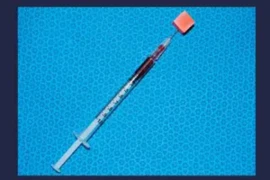
This webinar is all about arterial blood gasses: Why to collect them, where to collect them, how to collect them including how to handle the sample to ensure accurate results, and what the results tell you about your patient’s lung function. Additionally, we will discuss the different processes that cause hypoxaemia in dogs and cats.

Recording from 25 January 2024

Referent:In:
Melissa Claus.jpg

Melissa Claus

DVM, Diplomate ACVECC

I’ve been involved in the veterinary industry for most of my life, first as a vet nurse and later as a veterinarian. I became a boarded specialist in Emergency and Critical Care in 2010. Shortly thereafter, I left the United States for Australia to begin a career in academia at Murdoch University to fulfill my passion for teaching veterinary students, nurses, residents, and interns. Since 2020, I have been a part time teleconsultant for VetCT, where I am part of a global support network of specialists who provide clinical guidance to veterinarians with challenging cases. In 2022, I left academia and joined a private practice specialty hospital in Perth, Australia, where I have been building a brand new small animal ECC service. My primary research interests are circulatory shock and transfusion medicine. Other interests include fluid balance, electrolytes, acid-base, pulmonary physiology, physiology of fever, and extracorporeal therapies.
Outside of work, I enjoy spending time with my husband and 3 kiddos, and small menagerie of 2 dogs, 1 cat, 1 rabbit, 1 goat, and 6 chooks.

Buchungsinfo

Dauer: 1:01 h
Referent:In: Melissa Claus
ab 1
34 ,-
(inkl. USt.)

Das könnte Dich auch interessieren

E_26_06_25_The Cushings Conundrum- From Diagnosis to Nursing Care_300x200.png
25.06.2026 (UTC)
18:00 - 19:00 (UTC)

The Cushings Conundrum: From Diagnosis to Nursing Care

Cushing’s is often difficult to recognize, diagnose, and treat. Angela Rathmann will discuss how nurses can improve care and outcomes for these complex patients.


E_26_05_20_Feline Dentistry- Top Five Feline Dental Concerns?_300x200.png
20.05.2026 (UTC)
18:00 - 19:00 (UTC)

Feline Dentistry - The Top Five Feline Dental Concerns For Nurses

Feline dental disease is common, painful and often overlooked. This lecture by Benita Altier highlights the top five conditions to improve early recognition, diagnosis and treatment in clinical practice.


Monitoring_300x200.png
30.04.2026 (UTC)
18:00 - 19:00 (UTC)

Monitoring des Herz-Kreislaufsystems während der Narkose

Monitoring des Herz-Kreislaufsystems während der Narkose - EKG und Blutdruck mit Dr. Nina Gasparik-Küls.